The Ultimate Beginner's Guide to Human Anatomy for Fitness
Walking into a gym for the first time can feel like visiting a foreign country where you don't speak the language. Everyone is talking about "hypertrophy," "posterior chains," and "isolating the lats." But before you can master the movements, you need to understand the map: your own body.
Why Anatomy Matters for Your Gains
You don't need a medical degree to get fit, but knowing the basic layout of your muscular system is a superpower. It allows you to visualize the muscle contracting during an exercise—a technique known as the mind-muscle connection—which has been shown to increase muscle fiber recruitment.
The Major Players
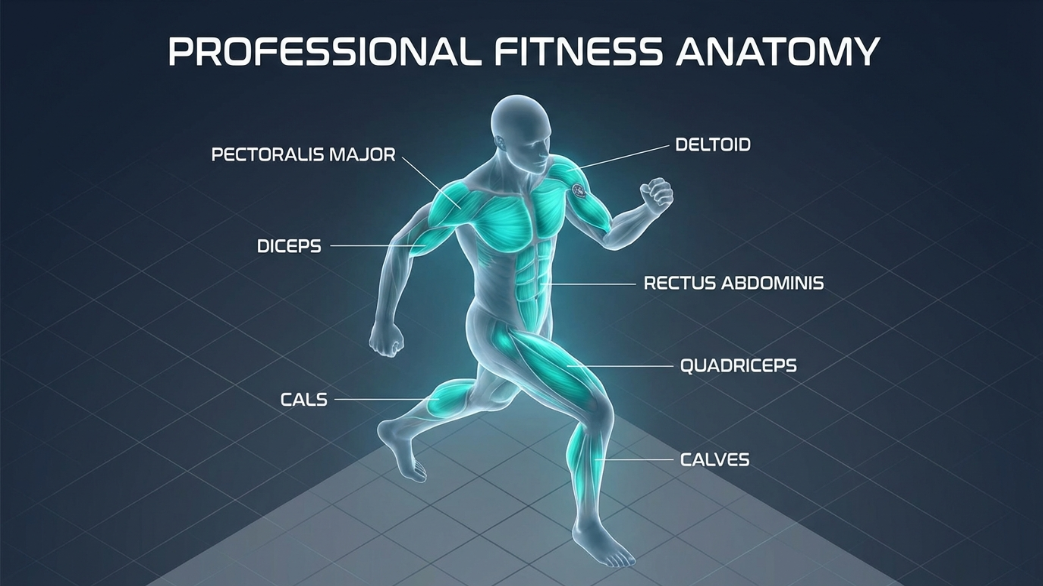
In our Muscle Explorer tool, we've simplified the body into the most critical groups for fitness:
- Anterior (Front): Chest (Pectorals), Shoulders (Deltoids), Abs (Rectus Abdominis), and Quads.
- Posterior (Back): Upper Back (Traps & Rhomboids), Mid Back (Lats), Glutes, and Hamstrings.
Master Your Anatomy
Ready to see these muscles in action? Explore our interactive map.

Click the image above to open Muscle Explorer.
Starting Your Journey
Begin by identifying one muscle group each session. If you're doing a "Push" day, look at your chest and shoulders in the tool. Understand where they attach and what their primary function is (usually pushing things away or overhead).
Pro Tip
Use the Muscle Explorer on your phone while in the gym to quickly check which muscle an exercise is supposed to target.Conclusion
Anatomy isn't just for doctors; it's the foundation of effective training. By learning the "why" behind your movements, you'll see faster results and feel more confident on the gym floor.